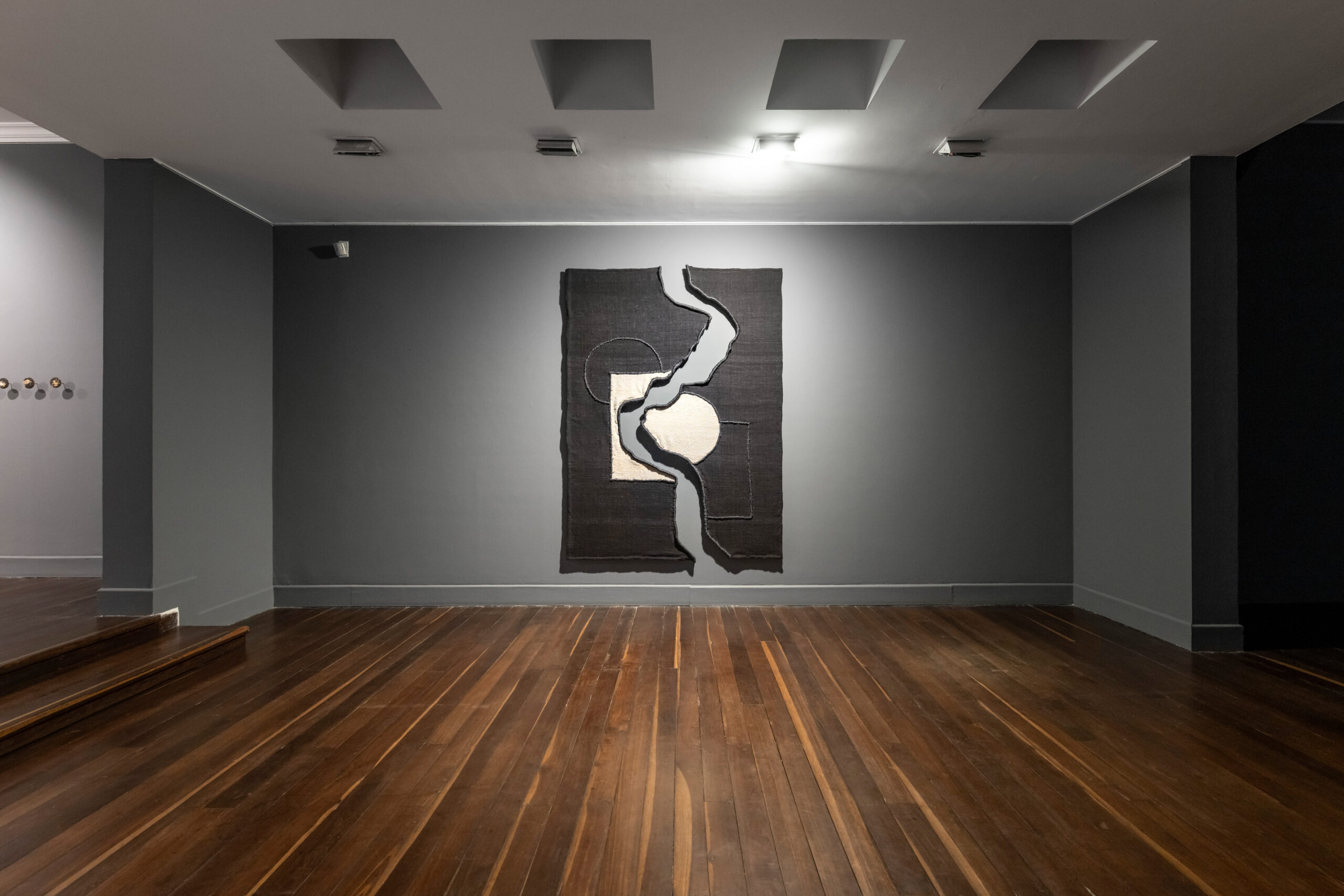
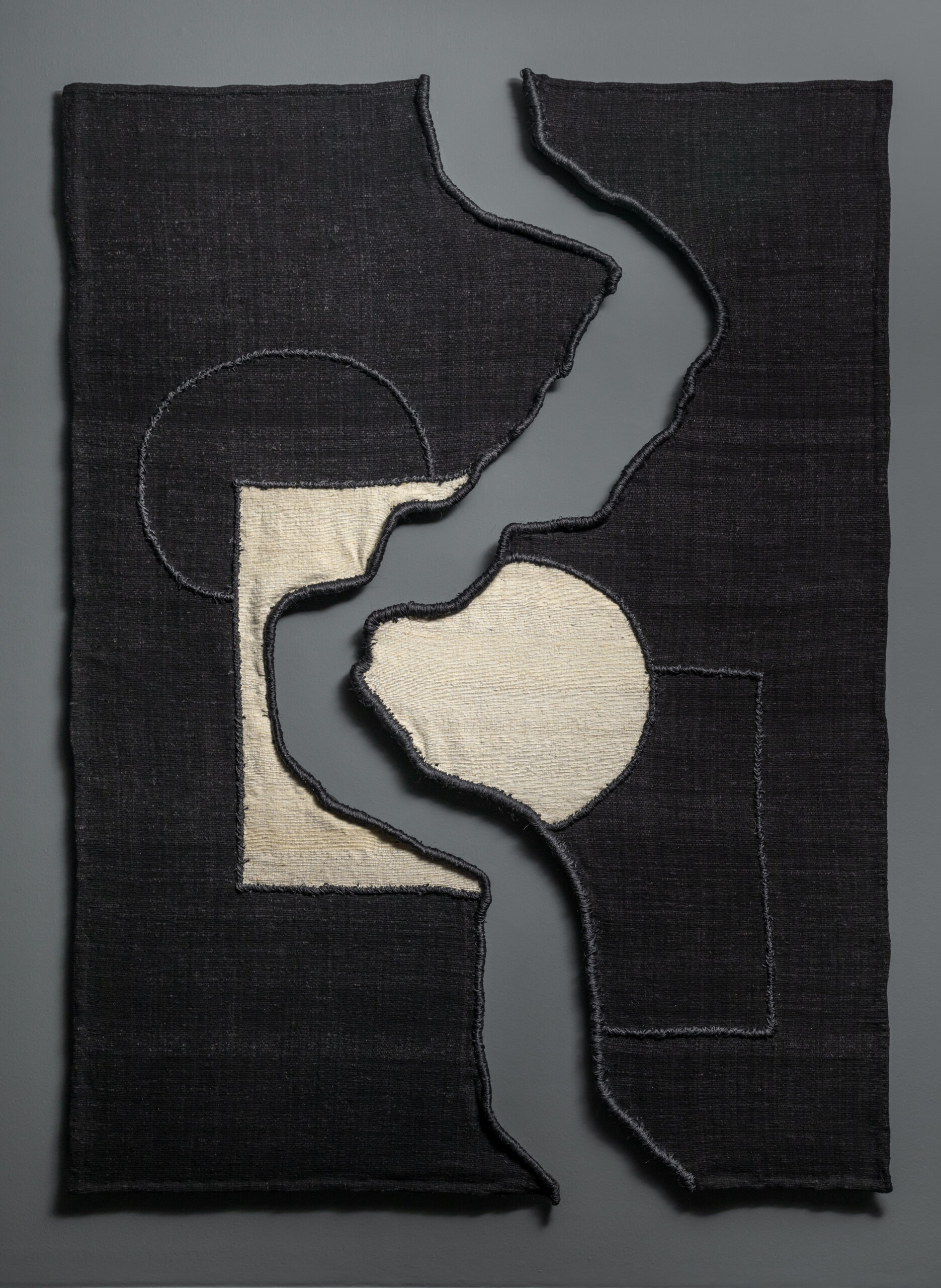
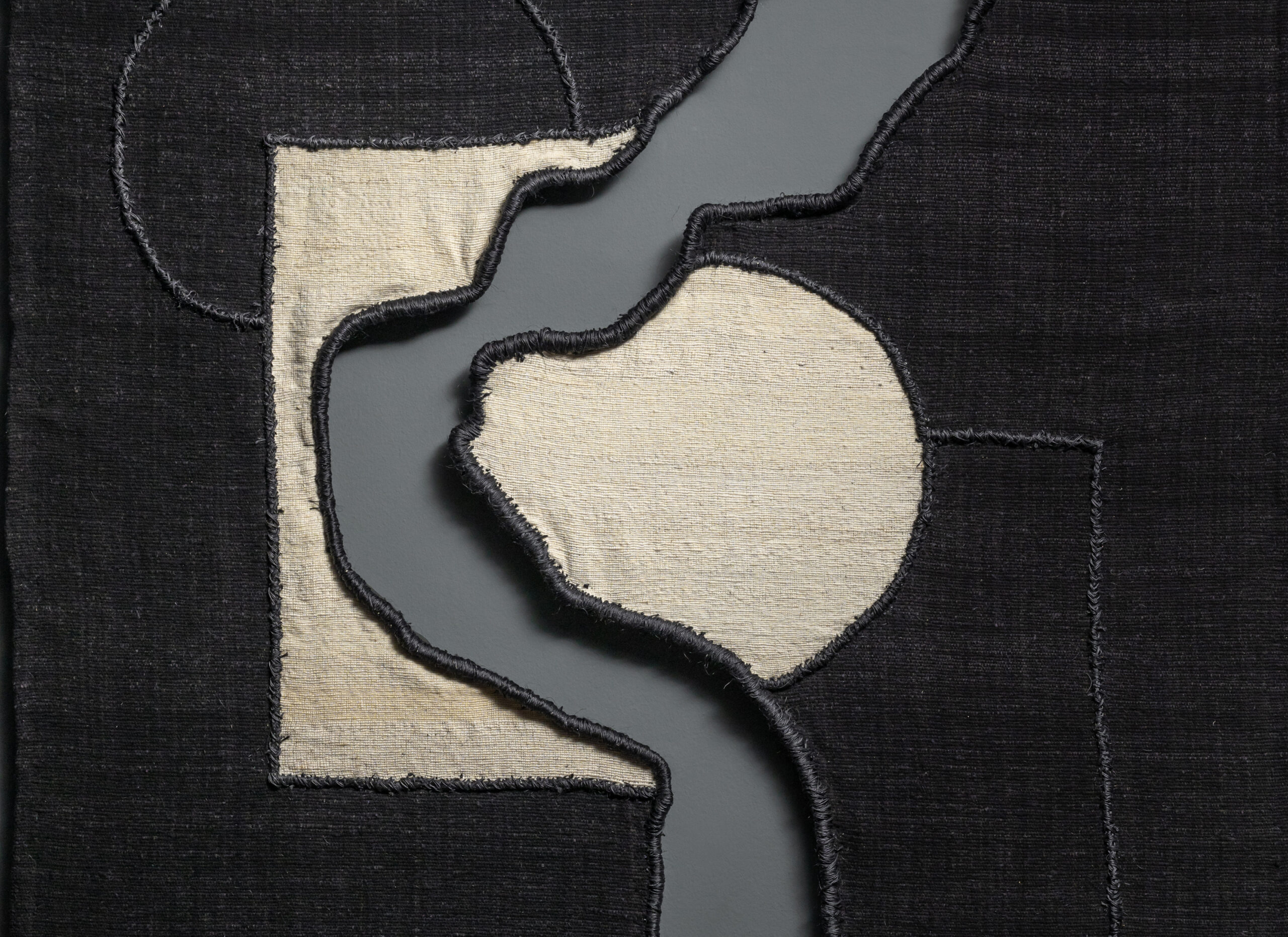
Bagüe, 2024. Dimensions: 217 x 158 x 5 cm. Woven in wool, cotton thread, and fique in horizontal loom.
«(…) When there was only darkness and emptiness, Mother BAGÜE, the Black Goddess, was alone. She was the thought, the imagination, and the force of what was to come. She was the light before light, the movement before movement, and the boundless space. She was time before time existed, she was Spirit, she was the breath of all that was to come—she was the time and space of everything before creation. Everything existed within the Mother as thought and memory. It was all there, in the darkness, and yet it was nothing (…) Mother BAGÜE held in her prodigious memory the entire cosmos: paradise, the stars, the sun, the moon, the water, the wind.»
—The Origin of Rozo Gauta, 1998.
Bagüe is a weaving made of wool, cotton yarn, and fique, inspired by Mother Bagüe of the Mhuysqa culture—that maternal-feminine force that precedes all creation. The feminine energy that gives rise to movement in its very first breath.
In the weaving, we see a circle representing the celestial world, and a square representing the earthly world—symbols present in both the visible and invisible realms. The fabric is divided into two parts, evoking the movement found in all creation myths: the Big Bang, the separation of continents, and so on. Movement as a vital force of creation.
___
(…) Cuando solo había oscuridad y vacío, la Madre BAGÜE, la Diosa Negra, estaba sola. Ella era el pensamiento, la imaginación y la fuerza de lo que estaba por venir. Era la luz antes de la luz, el movimiento antes del movimiento y el espacio infinito. Era el tiempo antes de que existiera el tiempo, era el Espíritu, era el aliento de todo lo que estaba por venir: era el tiempo y el espacio de todo antes de la creación. Todo existía dentro de la Madre como pensamiento y memoria. Todo estaba allí, en la oscuridad, y sin embargo no era nada (…) La Madre BAGÜE guardaba en su prodigiosa memoria todo el cosmos: el paraíso, las estrellas, el sol, la luna, el agua, el viento».
—El origen de Rozo Gauta, 1998.
Bagüe es un tejido hecho de lana, hilo de algodón y fique, inspirado en la Madre Bagüe de la cultura Mhuysqa, esa fuerza maternal-femenina que precede a toda la creación. La energía femenina que da lugar al movimiento en su primer aliento.
En el tejido, vemos un círculo que representa el mundo celestial y un cuadrado que representa el mundo terrenal, símbolos presentes tanto en el reino visible como en el invisible. La tela está dividida en dos partes, evocando el movimiento de separacion que se encuentra en todos los mitos de la creación: el Big Bang, la separación de los continentes, etc. El movimiento como fuerza vital de la creación.