Atrapar Silencio l
2024
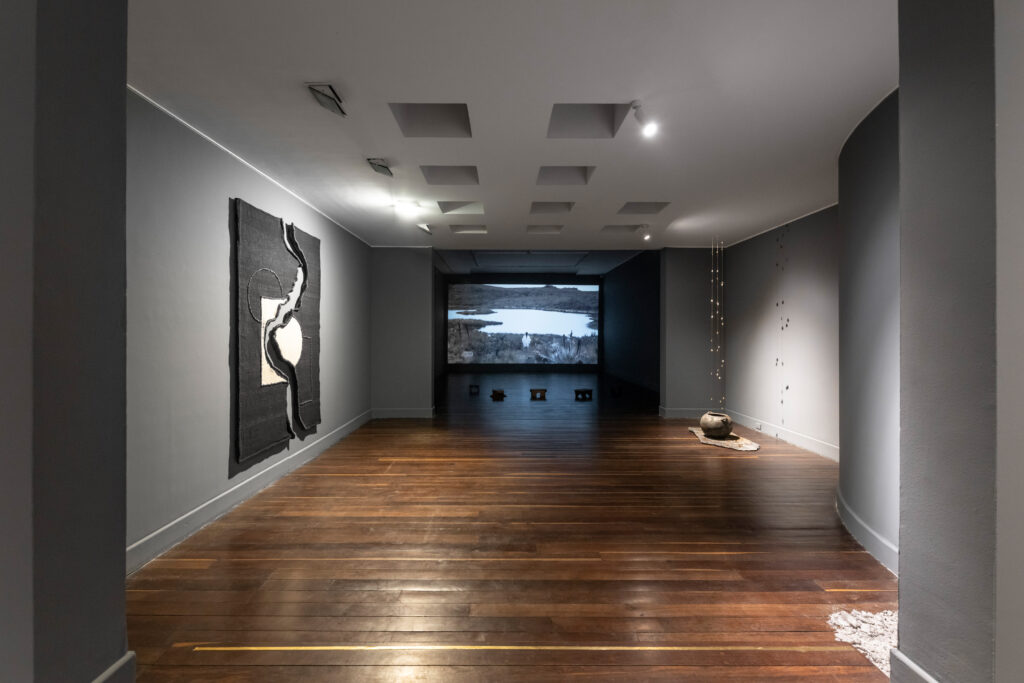
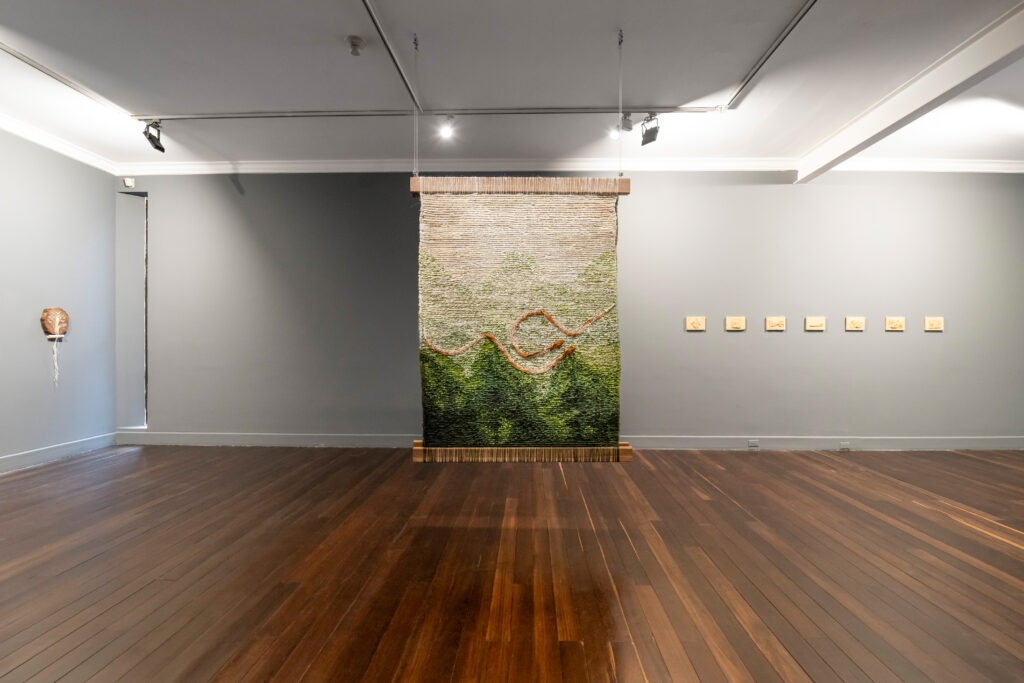
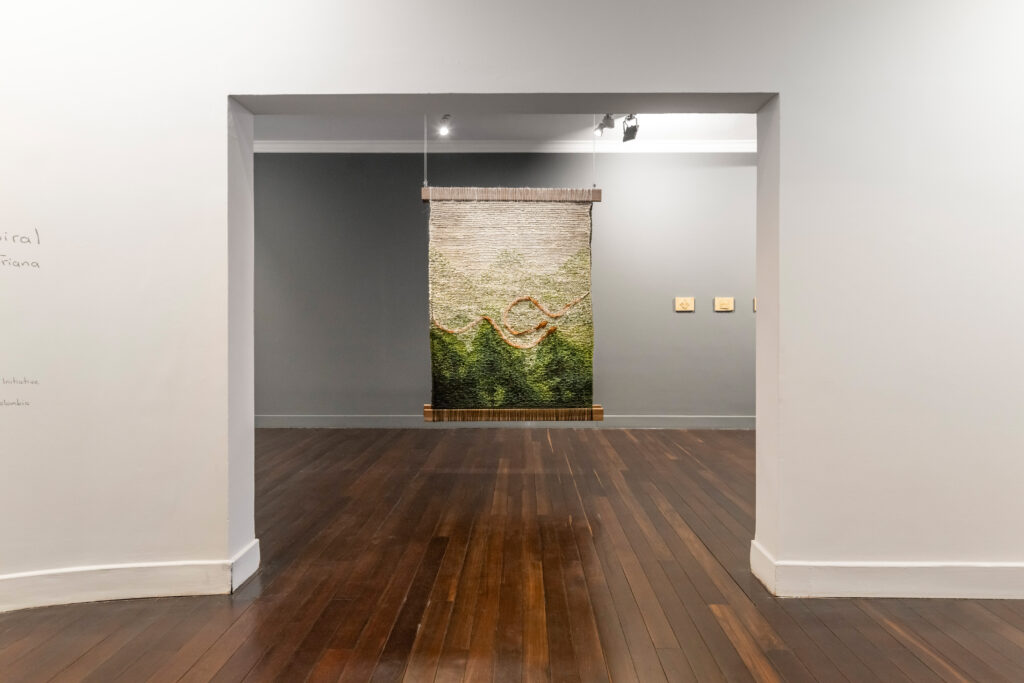
The artist rewrites with threads the memories she collected while walking her ancestral territory. She proposes the possibility of -remembering with the feet-.
Atrapar Silencio ll
2025
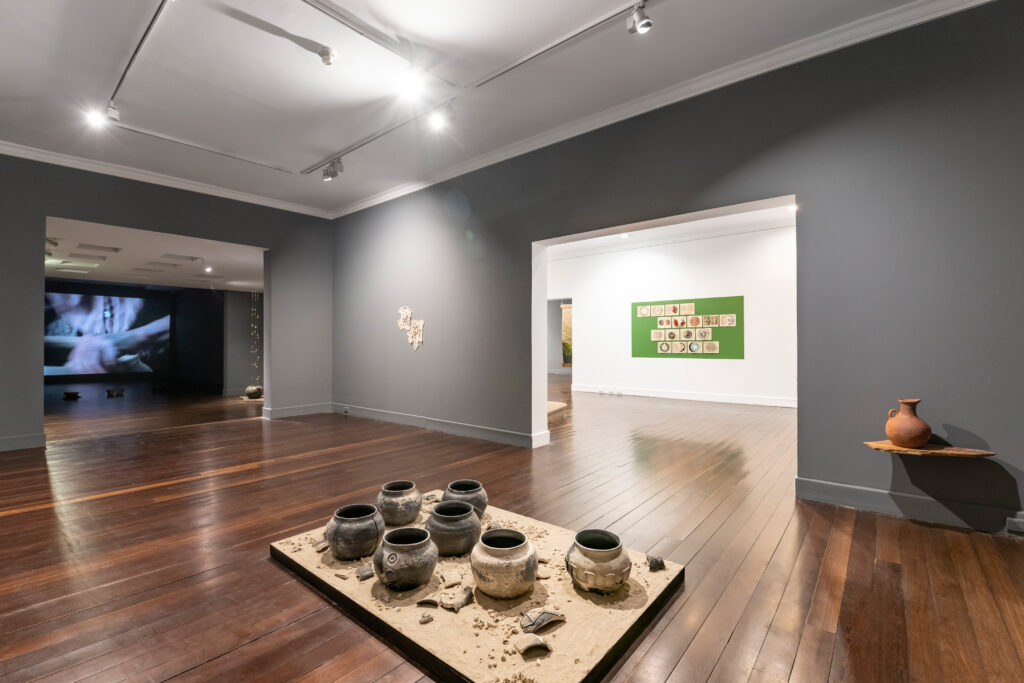
The artist recognizes herself as a mestizo, and from the materials she uses, she proposes a conversation between her ancestral Mhuysqa heritage and the Western culture in which she was educated.
Laguna de Iguaque: interior y exterior
2024
The Iguaque lagoon is one of the sacred lagoons of the Mhuysqa ancestral territory. According to the myth of Batchue, in this lagoon live the father and the mother of the Mhuysqas. Feminine-Masculine and inner-outer, opposite energies that create balance in the cosmos.
Bagüe
2024
When there was only darkness and emptiness, Mother Bagüé was alone. She was the spirit and breath of what was to come.
Bases Geométricas
2024
In Geometry is stored ancestral wisdom. Every being is composed of geometry. The smallest part of each being contains the information of the cosmos.
Piel de Madera
2024
The ancestral trees of the Mhuysqa territory, such as cedar, walnut, and oak, have been replaced by pine and eucalyptus, guided by the policies of progress and development of Western cultures.
Año Zocam and Año Rural
2024
In the Mhuysqa calendar, there are three types of years: the rural year (12 moons), the Zocam year (20 moons), and the Acrotome year, or priestly year (37 moons).
Moyas: Observatorio Lunar
2024
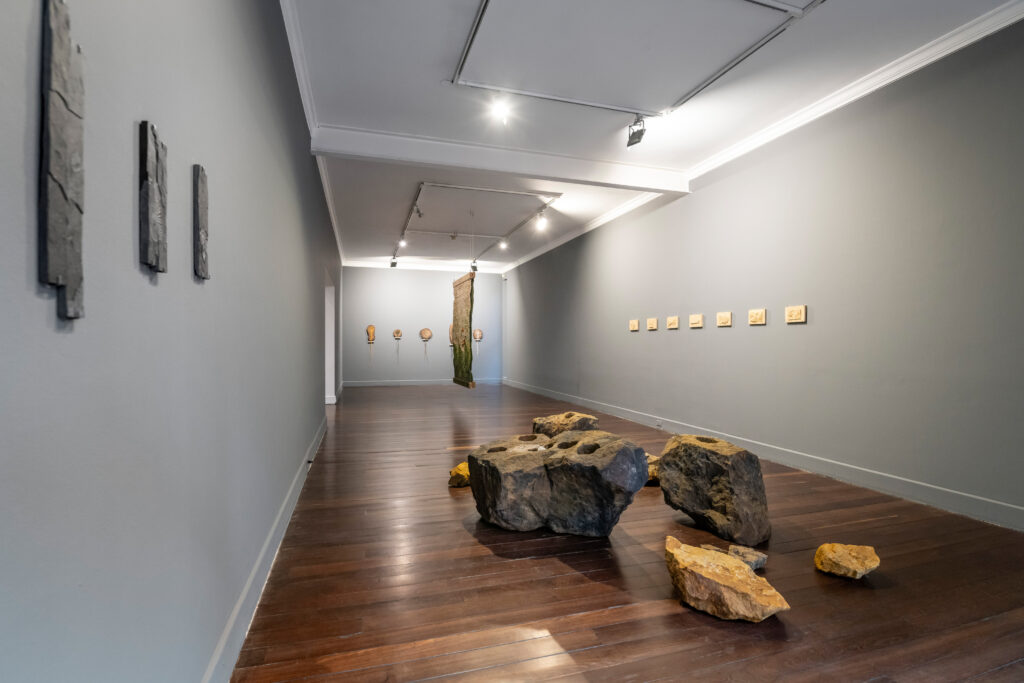
The Mhuysqas observed the moon by studying its reflection in water collected in small cavities carved into stones and placed in carefully chosen locations. These cavities were called Moyas. In this way, the stones functioned as lunar observatories.
Femenino-Masculino
2024
Through the observation of nature, one can perceive the coexistence of feminine and masculine energies in the creation of life. The masculine seed, given by the sun, joins the feminine seeds found in the waters of the lagoons. Through the rivers, the water carries these seeds to the earth, where life emerges in the crops.
Correr la Tierra
2024
In Correr la Tierra, Camila Rodríguez Triana returns to her ancestral territory in the Colombian Andes in a process she calls “remembering with the feet” or “remembering by walking.”
Palabra sagrada
2025
The sweet word excels the insulting word, and the deep word excels the empty word. The word is energy and has value: it is capable of building or damaging.
Ondas de la naturaleza
2025
For the Mhuysqa Indigenous people, energy circulates through the territory via water—lagoons, rivers, seas, rain, mist, and so on.
La primera vuelta de la espiral
2025
"Craftsmanship is a way to connect with the cosmos; it allows us to transcend eternity. Weaving is weaving life, weaving the universe; pottery is shaping worlds, shaping destiny; goldsmithing is elevating oneself, becoming spiritual, being light; working with wood and stone is recalling the memory of the cosmos (...)." — Grandmother Princess Mhuysqa
«Craftsmanship is a bridge to the cosmos; it allows us to transcend into eternity. Weaving is weaving life, weaving the universe; pottery is shaping worlds, shaping destiny; goldsmithing is ascending, becoming spirit, becoming light; working with wood and stone is to awaken the memory of the cosmos (…)»
Grandmother Princess Mhuysqa
For Camila Rodríguez Triana, the conscious ascent of the spiral—a metaphor for the labyrinth in which one loses and finds oneself countless times—began far from home, in France in 2017. There, faced with a profound sense of estrangement in a cultural landscape so different from her native Cali, she embarked on a process of questioning and healing that, years later, would lead her to search intently for her Origin: her own body and the land of her Mhuysqa ancestors.
Her first solo exhibition in Colombia is the result of months of theoretical and ethnographic research and a year-long pilgrimage to the sacred lagoons of Mhuysqa territory. It springs from what takes place on both the physical and spiritual planes when one engages wholeheartedly in exploring identity and ancestral lineage. The work also offers a first encounter with a central aspect of Mhuysqa cosmology: the complementary forces of feminine and masculine energy. Drawing from Mhuysqa myths, Rodríguez Triana calls on us to remember ancestral ways of thinking that cherished balance and harmony—worldviews that existed before the arrival of the Spanish invaders, who sought to separate these energies. For the Mhuysqas, their integration is essential to walking in harmony with the original principles of the great law.
For the artist, remembering is not nostalgia—it is an embodied act that connects body, mind, and heart, and through which identity is created. This is why she proposes to “remember with the feet and with the hands: with the feet, by walking the land; and with the hands, by returning to the ancestral crafts.”
In Mhuysqa tradition, the territory is revered not only as the “reflection of the celestial geography” but as the keeper of the Law of Origin. To know it is to walk it. As Rodríguez Triana explains: “When walking the land, all the senses enter into dialogue: images, gestures, feelings, flavors, sounds. By walking the land, I walk through time and history, and I also walk through my own body.”
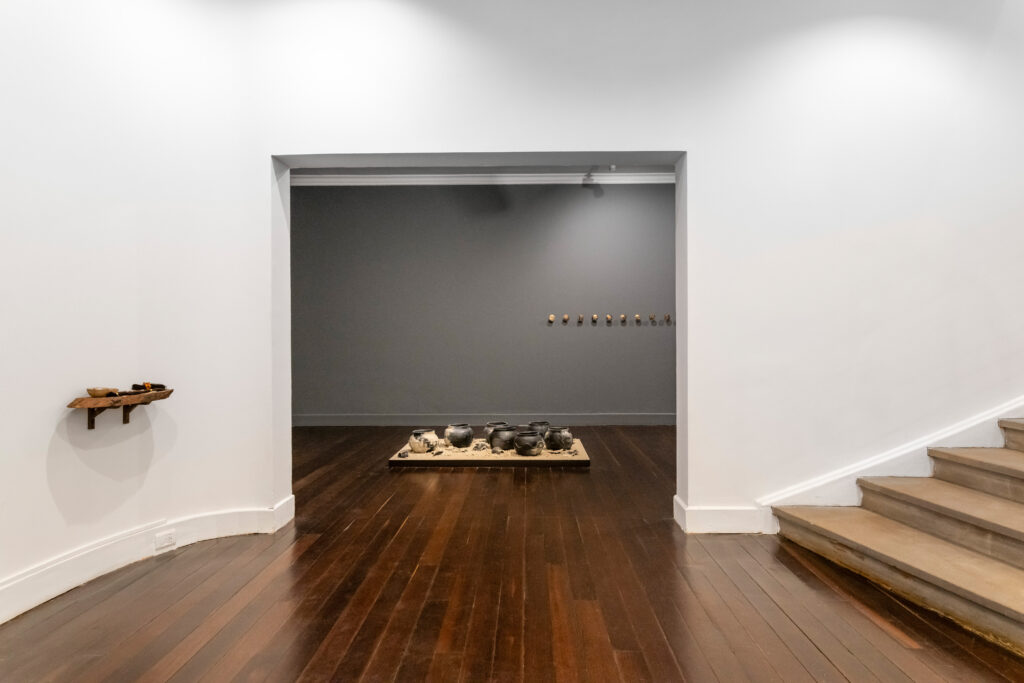
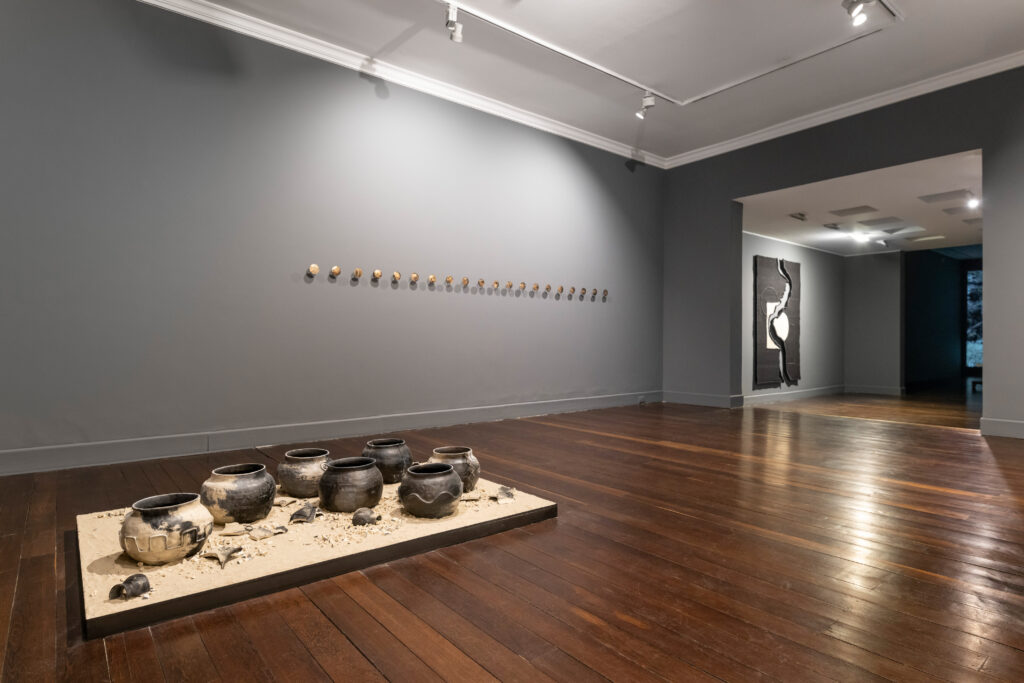
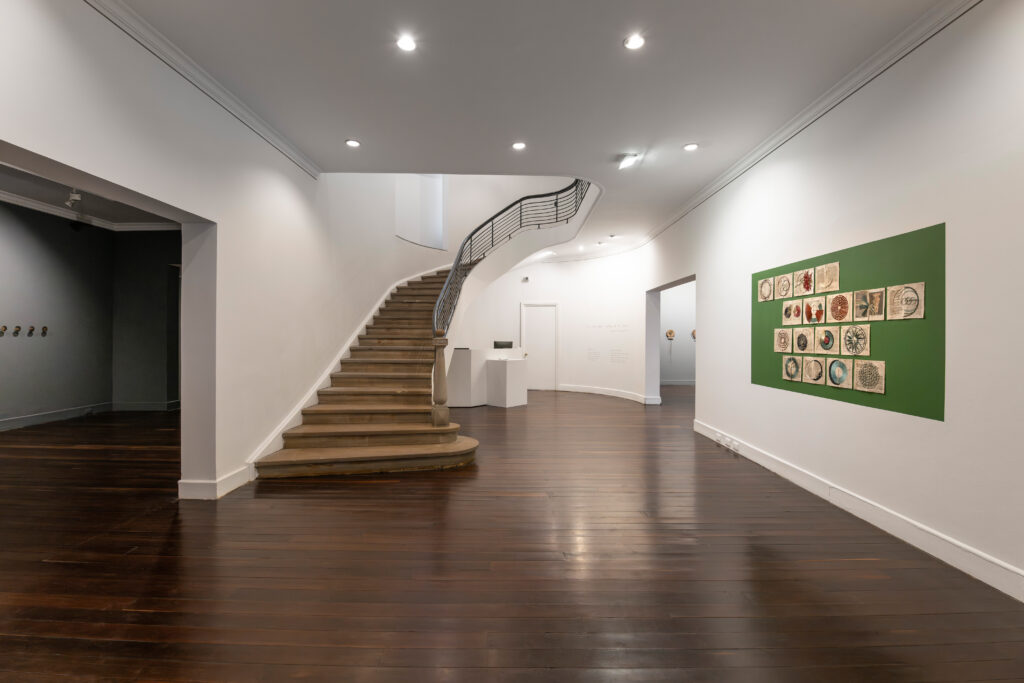
Even the union of feminine and masculine energy is mirrored in the land, especially in the seven lagoons—understood as wombs—that await the seed of the sun to give life to the earth. The artist visited these “containers of life” and translated them into three-dimensional works, often marked by the natural elements themselves. Their contrasting materials converse in harmony: fique fiber woven with copper thread; book pages painted with earth and embroidered with cotton; fique stitched onto wood; clay, metal, and stone slabs; limestone and copper.
The idea of dialogue—present both in the materials and in the conceptual fabric of the works—deepens when seen through the lens of mestizaje. Rodríguez Triana speaks of embracing her Indigenous heritage and reconciling it with her European roots as a way to shape her identity and transform her destiny. These works not only embody this interweaving; they also activate the subtle threads of healing, for herself and for her lineage.
The First Turn of the Spiral offers just a glimpse of Rodríguez Triana’s profound and ongoing reconnection with her ancestry—Mhuysqa and European—a journey that moves her to walk and “unwalk” the land with her feet, hands, and heart, returning to her home, her body, her center. In braiding her thoughts—connecting ideas to the heart and giving them form in an artistic language rich in poetry and nuance—she opens a space for us to enter the mysteries of Life, the unseen, and that which holds the power to transform us.
Paula Bossa
___
“Los oficios son una posibilidad de conectarnos con el cosmos, nos permiten trascender a la eternidad. El tejido es tejer la vida, tejer el universo; la alfarería es moldear los mundos, moldear el destino; la orfebrería es ascender, espiritualizarse, ser luz; el trabajo con la madera y la piedra es recordar la memoria del cosmos (…)”
Abuela Princesa Mhuysqa
Para Camila Rodríguez Triana el ascenso consciente de la espiral—ese laberinto en el que uno se pierde y se encuentra múltiples veces a lo largo de la vida—, inicia en la lejanía de Francia en el año 2017. Allí, ante el florecimiento de un profundo sentimiento de enajenamiento en un contexto tan distinto a su ciudad natal Cali, la artista inicia un proceso de cuestionamiento y sanación que, años después, la llevaría a indagar de manera insistente y atenta por su Origen: su cuerpo y el territorio habitado por sus ancestros los Mhuysqas.
Así, la primera exposición individual de Camila Rodríguez Triana en Colombia se teje a partir de meses de investigación teórica y etnográfica, una peregrinación realizada a lo largo de más de un año a las lagunas sagradas que comprenden el territorio Mhuysqa y todo aquello que acontece en los planos físico y espiritual cuando se dispone con entrega y vehemencia a indagar por su identidad y el linaje que la precede. Asimismo, es un primer acercamiento a tan solo un aspecto de la compleja y profunda cosmogonía Mhuysqa: las energías femenina y masculina y su vínculo indisoluble. Rodríguez Triana propone recordar—apoyada en el estudio de los mitos Mhuysqas— aquellos pensamientos ancestrales enfocados en el equilibro y la complementariedad de dichas energías que prevalecían antes de la llegada de los invasores españoles quienes optaron por separarlas, pues su comprensión e integración propician el caminar armonioso del ser humano dentro de los principios originales de la ley mayor.
Para la artista, el acto de recordar es un accionar que involucra la conexión del cuerpo, mente(consciencia) y corazón, que posibilita la creación de una identidad. Por ello, a través de su trabajo propone: “hacer memoria con los pies y con las manos. Con los pies al caminar el territorio, y con las manos al volver a trabajar los oficios ancestrales.”
Los Mhuysqas veneran el territorio pues no solo es el “reflejo de la geografía celeste”, en él yace la ley de Origen. Para conocerlo y comprenderlo es necesario caminarlo. En palabras de la artista: “Al caminar el territorio todos los sentidos se ponen en diálogo: las imágenes, los gestos, los sentimientos, los sabores, los sonidos. Al caminar el territorio camino el tiempo y la historia y camino también mi propio cuerpo.” Incluso, la unión de las energías femenina-masculina se manifiesta en el territorio, específicamente en las siete lagunas o úteros que esperan ser tocadas por la semilla del sol para posibilitar la vida en la tierra; estos úteros o contenedores de vida, fueron visitadas por la artista para luego ser traducidos por su manos en obras tridimensionales, en muchos casos pintadas por los elementos naturales y cuyos materiales contrastantes conversan armónicamente: tejidos en fique e hilo de cobre; páginas de libro pintadas con tierra y bordadas con hilos de algodón; fique bordado sobre madera; arcilla, metal y lajas de piedra; piedra caliza y cobre.
La idea de diálogo— presente a nivel material y conceptual en las obras que comprende la exposición— se complejiza en tanto que miramos dicha propuesta desde los ojos del mestizaje, pues Camila Rodríguez Triana nos habla de la importancia de abrazar su ancestralidad indígena y reconciliarla con la europea con el fin de construir su identidad y cambiar su destino. Así, estos trabajos no solo encarnan esta idea de entrecruzamiento, también sirven para mover aquellos hilos imperceptibles que conforman los campos sutiles en donde se activa la sanación no solo de la artista sino también de su linaje.
“La primera vuelta de la espiral”, recoge tan solo una mínima parte de una largo y profundo reencuentro de Rodríguez Triana con su ancestralidad (Mhuysqa y europea), aquella que la impulsa a caminar y a “descaminar” el territorio con sus pies, manos y corazón, para volver a su casa, su cuerpo, su centro. En el proceso de trenzar su pensamiento, es decir, de conectar sus ideas con el corazón y concretarlo en una producción artística repleta de poesía y sutileza, Camila Rodriguez Triana nos regala la posibilidad de adentrarnos en los misterios de Vida, de lo invisible, de lo que tiene el potencial de transformarnos.
Paula Bossa