Ejercicios de memoria, líderes asesinados I
2021
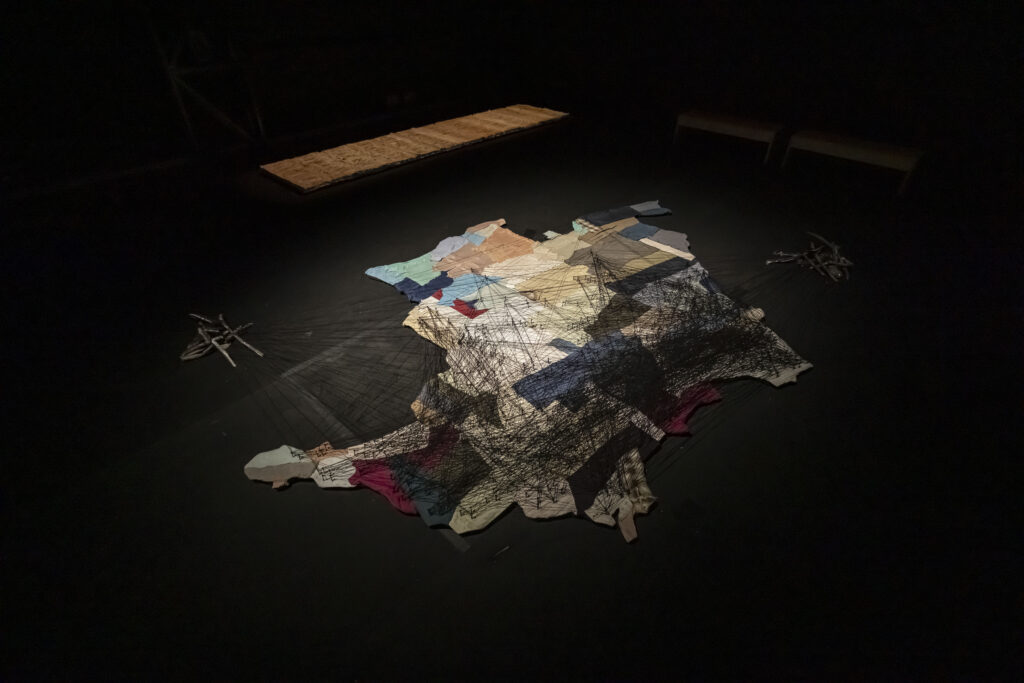
Rodríguez Triana builds a map of Colombia using old clothes collected from various family members of the victims.
Ejercicios de memoria, líderes asesinados III
2024
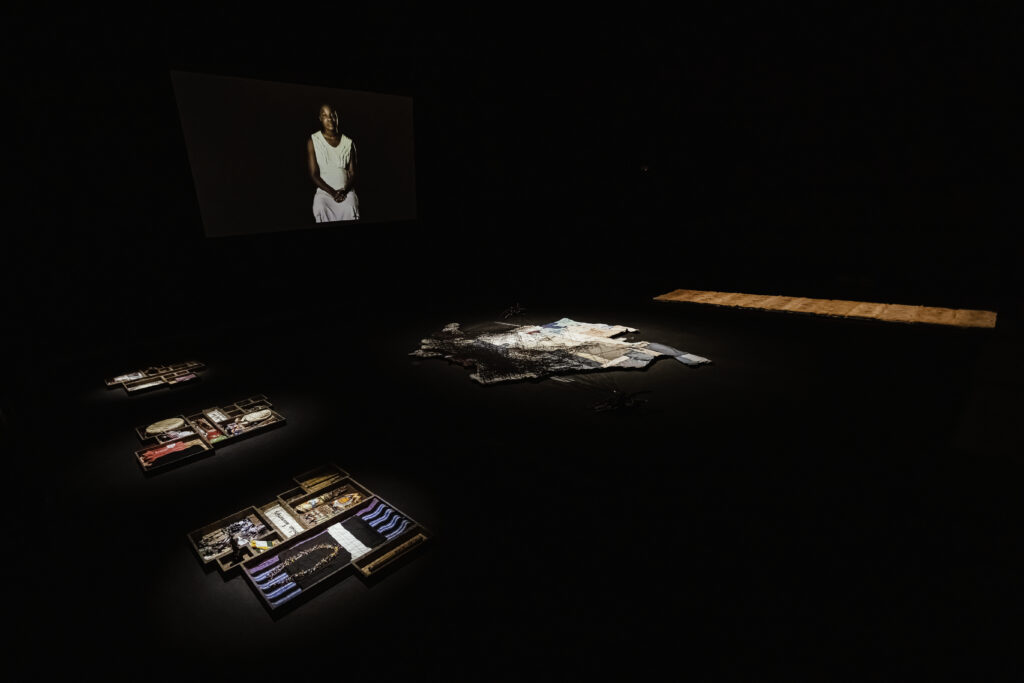
Eleven actors to lend their voices and bodies to embody the stories of social leaders murdered in Colombia.
Ejercicios de memoria, líderes asesinados IV
2024
In collaboration with three families of murdered social leaders, Rodríguez Triana creates three altars assembled from photographs, personal belongings, and objects that evoke their lives—their tastes, their histories, their very presence.
Ejercicios de memoria # 1, líderes sociales asesinados.
The exhibition Ejercicios de Memoria #1 is a direct challenge, a call, a cry. Art exists to name the unnameable, to give voice to the pain of those who survive, to reveal—through places and paths—the systematic nature of horror, to move and mobilize us so that we join the cry for justice. Camila asks: How can we say nothing in the face of this situation and go on with our lives as if it weren’t happening? The proposal of this exhibition is a response to that ethical need, as citizens of this society, to break the silence and bear witness to what is happening to our leaders—both men and women.
Violence has always relied on dehumanization as a weapon to erase and to facilitate forgetting. The leaders who are murdered are ours because they are our blood brothers and sisters, because they are the voice of the communities and the territory, the courage that defends life, the embodiment of the defense of the common good. They are the knot that ties our dreams so they do not unravel into hopelessness; they are the voice that defends our rights. When one is murdered, the dignity of a community—and our own—is murdered too; the social fabric that we all share is torn apart.
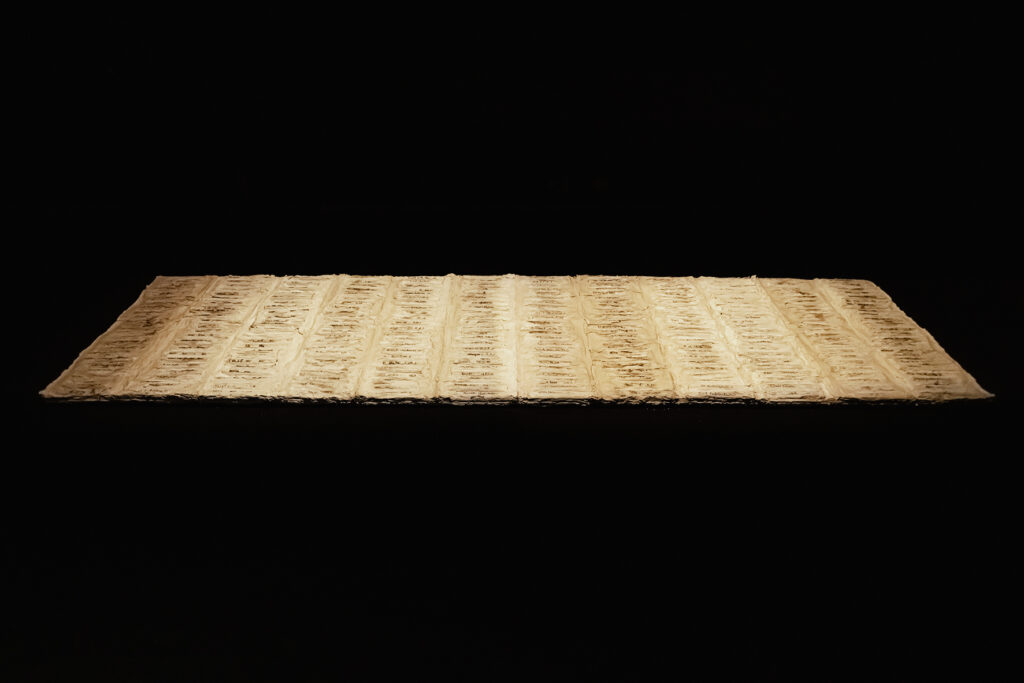
This is why the exhibition calls for the urgent need to re-humanize them and to re-humanize ourselves, embracing the defense of life in all its forms as our own, turning this mission into an intimate feeling. The exhibition Ejercicios de Memoria #1 itself proposes a journey from dehumanization to re-humanization. It allows us to feel forgetfulness in the names consumed by the hardness and cold of cement and plaster—a metaphor for a justice that has yet to arrive for all those unresolved cases; it traces the geography of these assassinations in our territory and shows how the stain of violence spreads with the permission of our silence; it restores the voices of leaders whose own were taken, as their families invite us to remember their lives through altars made with objects they treasure as proof that this humanity once existed and still lives on with them. We envision the re-humanization of the other as a way to build a path toward change.
If we have not watched the news, if our silence in the face of the extermination of the UP leaders does not shame us, if the statement by the Constitutional Court in ruling SU-546 of 2023—urging the State to guarantee the protection of human rights defenders as an imperative of the social rule of law—has not produced satisfactory results, and if the unconstitutional state of affairs continues, then it is art that must make us feel.
Lucía González Duque
___
La exposición Ejercicios de Memoria # 1 es una interpelación directa, un llamado, un grito. El arte está para nombrar lo innombrable, dando voz al dolor de quienes sobreviven, señalando con los lugares y trayectos la sistematicidad del horror, para conmovernos y movilizarnos para que nos sumemos al grito que reclama justicia. Dice Camila: ¿Cómo no decir nada frente a esta situación y seguir con nuestras vidas como si esto no estuviera pasando? La propuesta de esta exposición es una respuesta a esa necesidad ética como ciudadanos de esta sociedad de romper el silencio y hacer memoria frente a lo que está ocurriendo con nuestros líderes y lideresas.
La violencia siempre ha utilizado la deshumanización como un arma para anular y facilitar el olvido. Son nuestros los lideres que asesinan porque son hermanos de sangre, porque son la voz de las comunidades y el territorio, son el coraje que defiende la vida, son la encarnación de la defensa del bien común, son el nudo que ata los sueños para que no se conviertan en desesperanza, son la voz que defiende nuestros derechos. Cuando asesinan a uno, asesinan la dignidad de una comunidad y la nuestra, rompen el tejido social del que todos somos parte.
Por ello en esta exposición se plantea la necesidad de re-humanizarlos y re-humanizarnos, asumiendo como propia la defensa de la vida en todas sus formas, convirtiendo esta misión en un sentimiento íntimo. La exposición “Ejercicios de Memoria # 1” en si misma nos propone un camino de la deshumanización a la re-humanización. Nos deja sentir el olvido en nombres que han ido consumiendo la dureza y el frio del cemento y el yeso de una justicia que aún no llega para todas esas causas judiciales que siguen sin ser resueltas; nos muestra el recorrido de estos asesinatos en nuestro territorio y como esa mancha de la violencia se expande con el permiso de nuestro silencio; le vuelve a dar voz a las historias de los lideres y lideresas a los que les quitaron su voz y sus familias nos invitan a recordar sus vidas en altares que hicieron con los objetos que atesoran como una prueba de que esa humanidad existió y sigue con ellos. “Nos planteamos la rehumanización del otro como una forma de construir un camino de cambio”.
Si no hemos visto las noticias, si nuestro silencio frente al exterminio de los lideres de la UP no nos avergüenza, si la afirmación de la Corte Constitucional en la Sentencia SU-546 de 2023 en la que conmina al Estado a garantizar la protección de la población defensora de derechos humanos como un imperativo del Estado social de Derecho no ha dado resultados satisfactorios y continúa el Estado de Cosas Inconstitucional, está el arte para hacernos sentir.
Lucía González Duque