Hanan Pacha
2022
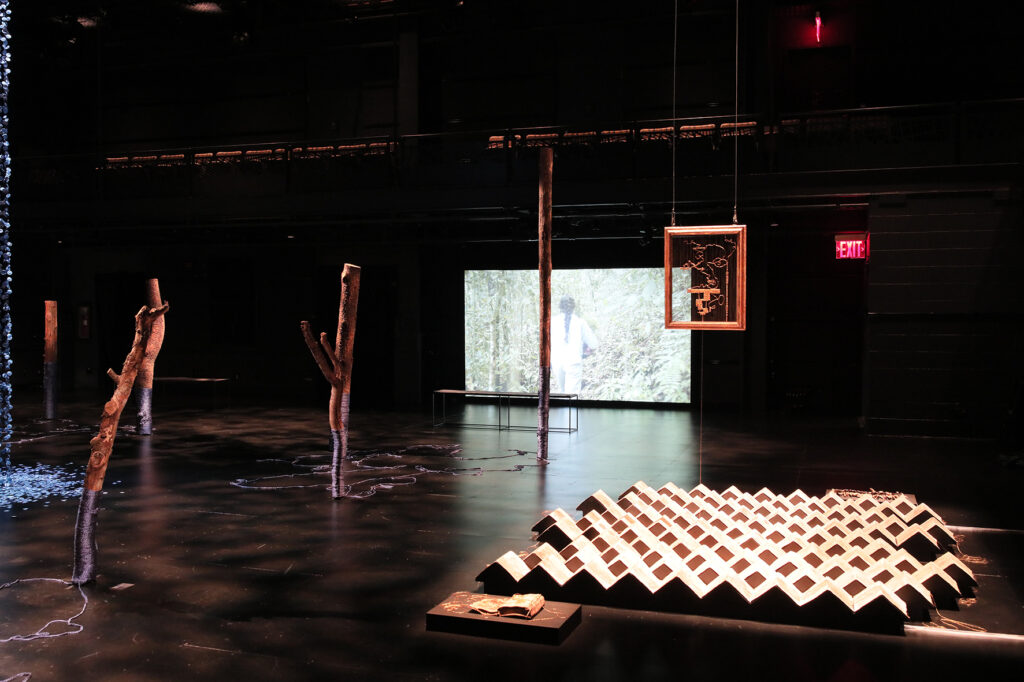
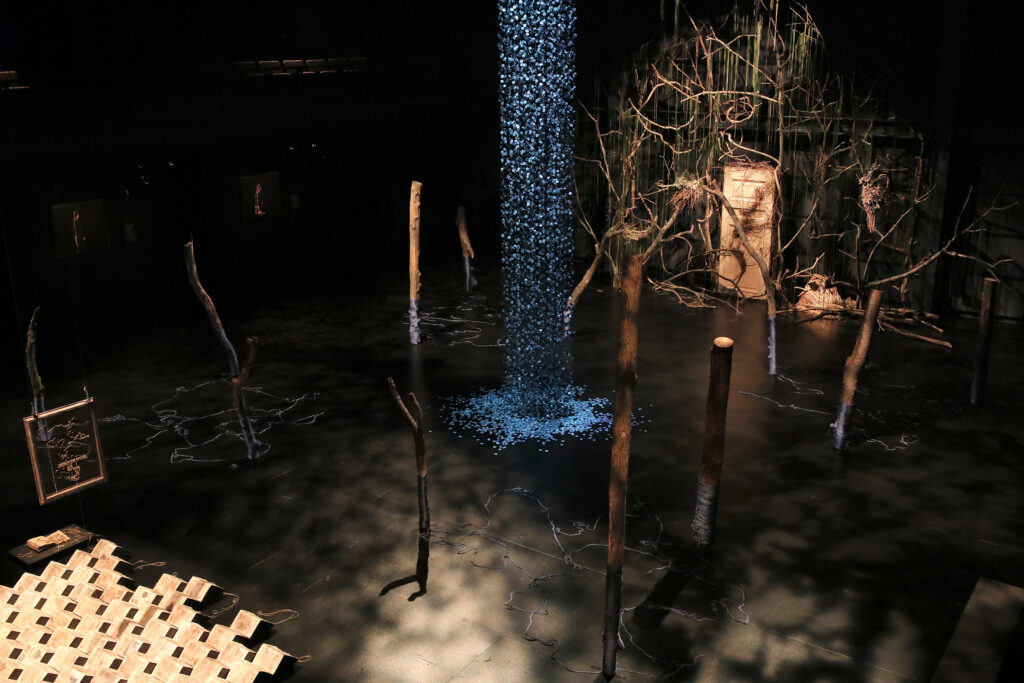
In Andean culture, Hanan Pacha refers to the spiritual or celestial world. It is the realm where the gods dwell, accompanied by animate beings such as hills, rivers, stones, trees, animals, and more.
Kay Pacha
2022
Kay Pacha (also Cay Pacha in Quechua or Aka Pacha in Aymara) is the Andean concept for the material world in which humans live, accompanied by mediating deities. It begins with birth and ends with death. Its essence is strength and patience.
Ukhu Pacha
2019
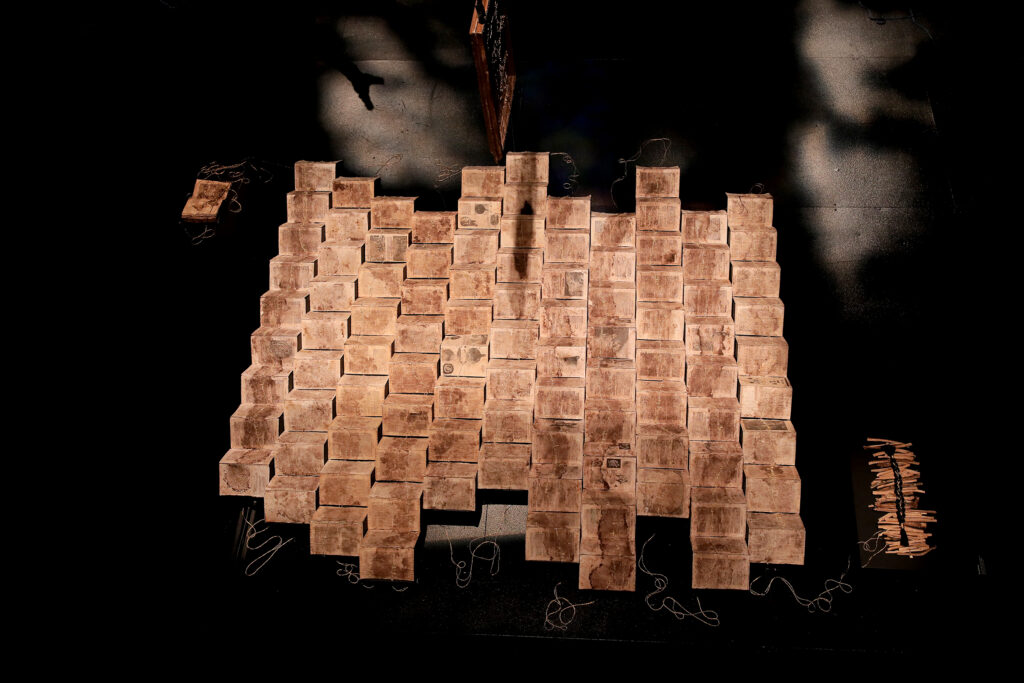
In Andean cosmology, Ukhu Pacha is the underworld, the realm of the ancestors. In this installation, Rodríguez Triana intervenes history books from the territory where she and her ancestors were born—books that include both ancestral knowledge and colonial violence.
Secretos de los Andes
2024
The mystery dwells in that which we cannot name, in that place where opposites meet: the delicate with the rough.
Tierra del vientre
2023
For the Mhuysqas, time was conceived as cyclical or spiral-shaped, mirroring recurring events in nature.
Nasqua
2022
This suitcase reflects the journey that the artist's ancestors had to undertake when they were displaced from their lands by violence. In that suitcase, their ancestors preserved their roots.
Improvisación # 1
2021
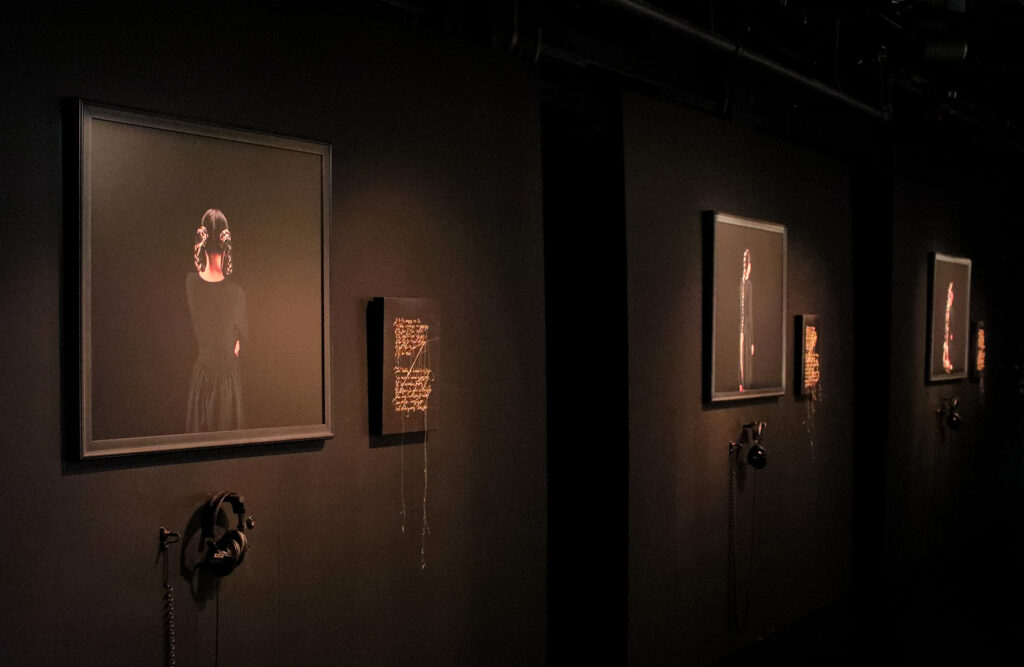
Holman Álvarez, Camila Rodríguez Triana, and Adrien Chauvin Picard come together to reflect—through music, words, and the body—on history and on how the version of history we learn shapes identity.
Mestizo Heritage
When you are mestizo, you know there is a vast ancestral knowledge that you cannot access, because you are not recognized as Indigenous, Black, or white. Ancestral languages, cosmologies, rituals, beliefs, symbols—all become a denied inheritance. To be mestizo is to be a mixture of everything, without being able to fully access any of it. This blending of cultures seems to open the door to experimentation; you could almost be anything, reinvent yourself blindly without knowing your ancestral past—sometimes feeling that something is missing, without knowing exactly what it is. Being mestizo is like living with a loss of origin, being orphaned, and trying to build yourself within that orphanhood. For me, being mestiza means living in a constant search for identity.
My work questions that lost origin and the heritage I did not receive. Through exercises of reappropriation using materials linked to ancestral arts—such as thread, wood, and recycled objects—I try to intuitively construct a mestizo ancestral heritage. I work with concepts, ideas, and objects from ancestral cultures, or historical events, and I reappropriate them, transform them, and create something new that I can feel connected to—something that resonates with my ancestors, my memories, my emotions, and becomes my heritage. These are intuitive memory exercises—of a lost language, a reconstruction of my ancestral history using the names of my ancestors and the history of the territory where I was born, the creation of ancestral objects linked to memory, the reappropriation and resignification of hairstyles, necklaces, and more.
My aim is not to imitate the Indigenous, Black, or white heritages that were denied to me, but rather, using elements from those denied legacies—as clues to my ancestral past—to construct my own heritage: a mestizo heritage.
The exhibition Mestizo Heritage is built through an act of reappropriation of the Andean ancestral conception of the universe as divided into three worlds:
Uka Pacha, the underworld, where the ancestors reside and the roots become nourishment;
Kay Pacha, the present, material world that begins at birth and ends at death;
Hanan Pacha, the spiritual world, where the gods dwell and where mountains, rivers, stones, trees, and animals coexist as animated beings.
Camila Rodríguez Triana.
___
Cuando eres mestizo, sabes que hay un vasto conocimiento ancestral al que no puedes acceder, porque no se te reconoce como indígena, negro o blanco. Las lenguas ancestrales, las cosmologías, los rituales, las creencias, los símbolos… todo ello se convierte en una herencia negada. Ser mestizo es ser una mezcla de todo, sin poder acceder plenamente a nada de ello. Esta mezcla de culturas parece abrir la puerta a la experimentación; casi podrías ser cualquier cosa, reinventarte a ciegas sin conocer tu pasado ancestral, sintiendo a veces que te falta algo, sin saber exactamente qué es. Ser mestizo es como vivir con una pérdida de origen, ser huérfano e intentar construirse a uno mismo dentro de esa orfandad. Para mí, ser mestiza significa vivir en una búsqueda constante de identidad.
Mi trabajo cuestiona ese origen perdido y la herencia que no recibí. A través de ejercicios de reapropiación utilizando materiales vinculados a las artes ancestrales —como hilo, madera y objetos reciclados—, intento construir de forma intuitiva una herencia ancestral mestiza. Trabajo con conceptos, ideas y objetos de culturas ancestrales o acontecimientos históricos, y los reapropio, los transformo y creo algo nuevo con lo que puedo sentirme conectada, algo que resuena con mis antepasados, mis recuerdos, mis emociones y se convierte en mi herencia. Se trata de ejercicios intuitivos de memoria: de una lengua perdida, una reconstrucción de mi historia ancestral utilizando los nombres de mis antepasados y la historia del territorio donde nací, la creación de objetos ancestrales vinculados a la memoria, la reapropiación y resignificación de peinados, collares y mucho más.
Mi objetivo no es imitar las herencias indígenas, negras o blancas que me fueron negadas, sino más bien utilizar elementos de esos legados negados —como pistas de mi pasado ancestral— para construir mi propia herencia: una herencia mestiza.
La exposición Patrimonio mestizo se construye a través de un acto de reapropiación de la concepción ancestral andina del universo dividido en tres mundos:
Uka Pacha, el inframundo, donde residen los antepasados y las raíces se convierten en alimento;
Kay Pacha, el mundo material presente, que comienza con el nacimiento y termina con la muerte;
Hanan Pacha, el mundo espiritual, donde moran los dioses y donde las montañas, los ríos, las piedras, los árboles y los animales coexisten como seres animados.
Camila Rodríguez Triana.