Tierra de abrigo
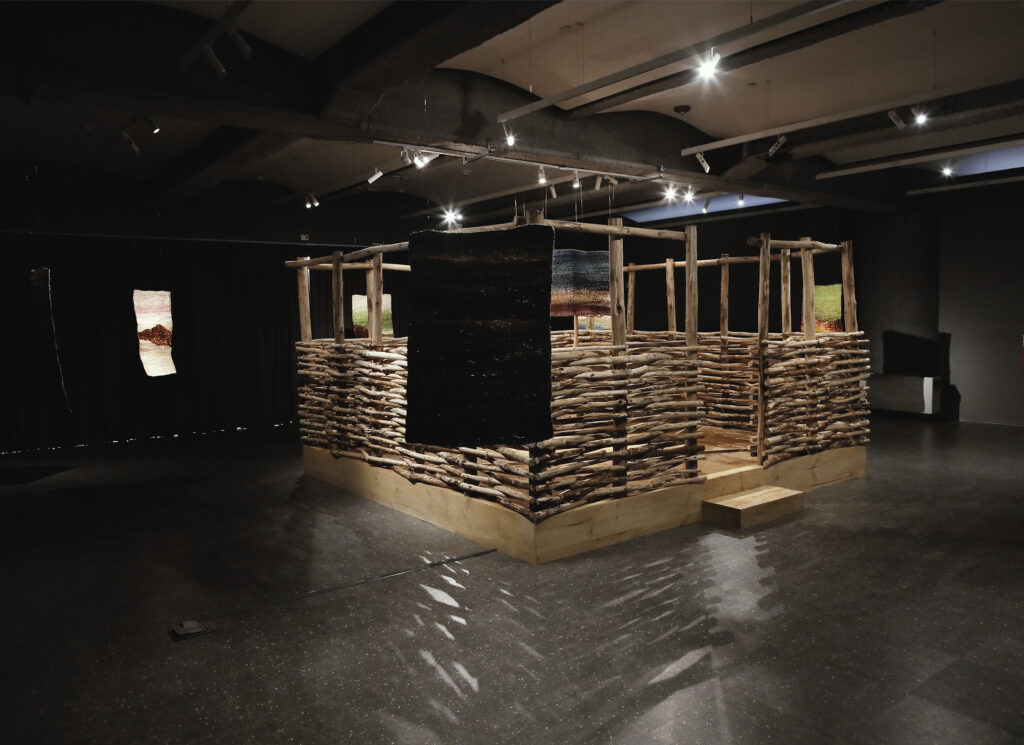
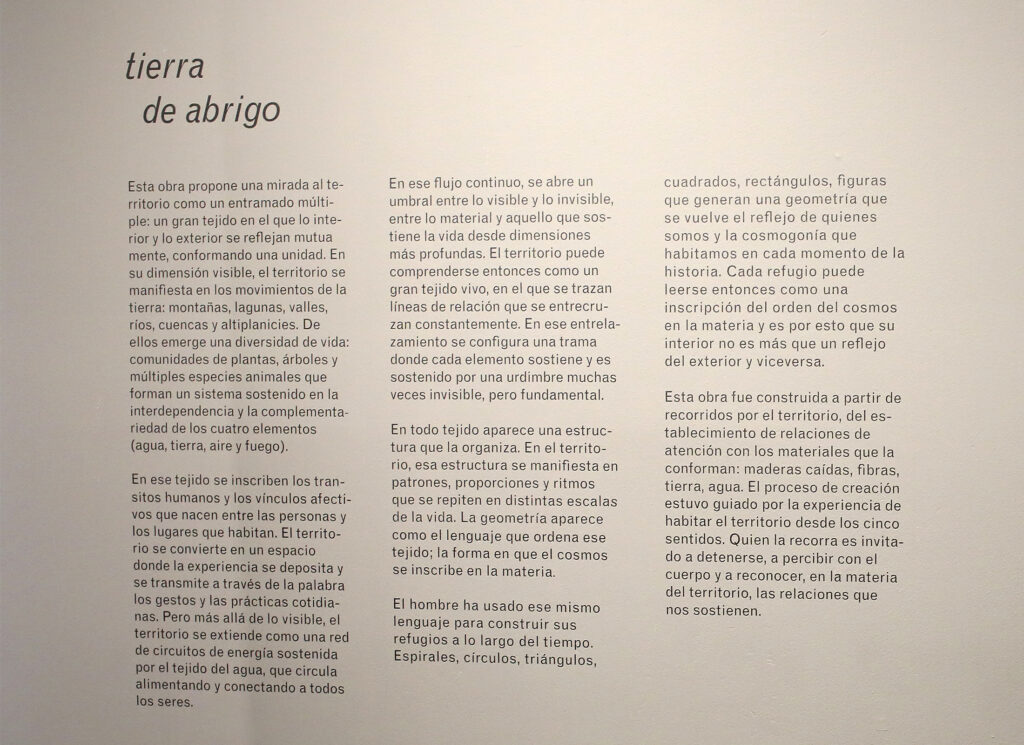
Esta obra propone una mirada al territorio como un entramado múltiple: un gran tejido en el que lo interior y lo exterior se reflejan mutuamente, conformando una unidad. En su dimensión visible, el territorio se manifiesta en los movimientos de la tierra: montañas, lagunas, valles, ríos, cuencas, altiplanicies. De ellos emerge una diversidad de vida: comunidades de plantas, árboles y múltiples especies animales que forman un sistema sostenido en la interdependencia y la complementariedad de los cuatro elementos (agua, tierra, aire y fuego).
En ese tejido se inscriben los transitos humanos y los vínculos afectivos que nacen entre las personas y los lugares que habitan. El territorio se convierte en un espacio donde la experiencia se deposita y se transmite a través de la palabra, los gestos y las prácticas cotidianas. Pero más allá de lo visible, el territorio se extiende como una red de circuitos de energía sostenida por el tejido del agua, que circula alimentando y conectando a todos los seres.
En ese flujo continuo, se abre un umbral entre lo visible y lo invisible, entre lo material y aquello que sostiene la vida desde dimensiones más profundas. El territorio puede comprenderse entonces como un gran tejido vivo, en el que se trazan líneas de relación que se entrecruzan constantemente. En ese entrelazamiento se configura una trama donde cada elemento sostiene y es sostenido por una urdimbre muchas veces invisible, pero fundamental.
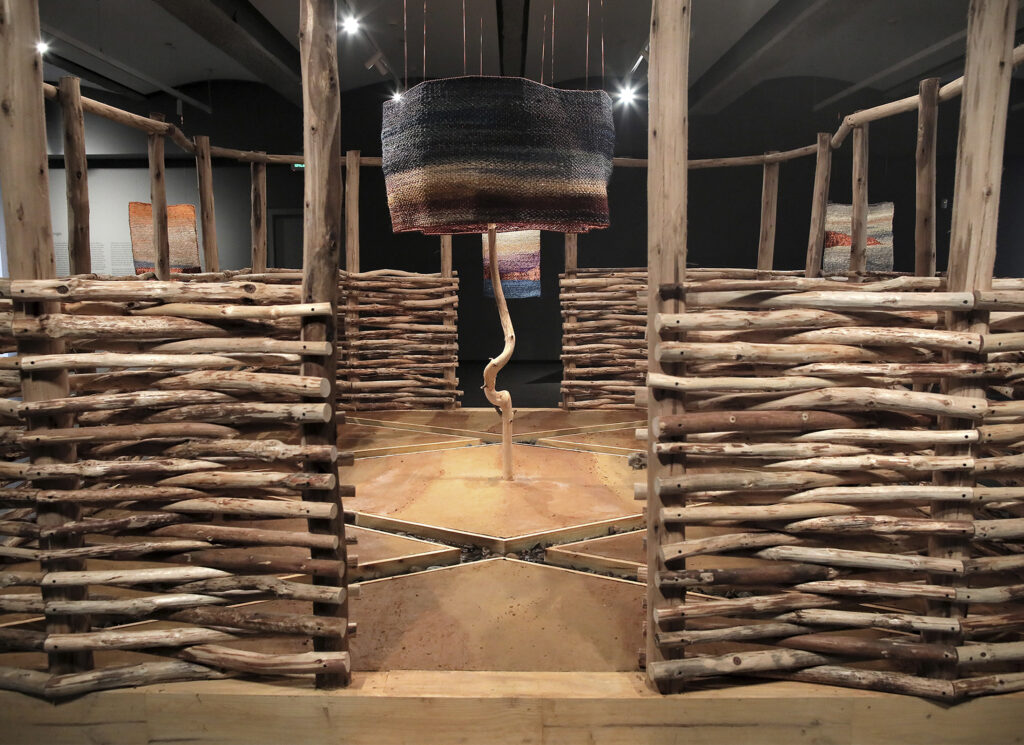
En todo tejido aparece una estructura que la organiza. En el territorio, esa estructura se manifiesta en patrones, proporciones y ritmos que se repiten en distintas escalas de la vida. La geometría aparece como el lenguaje que ordena ese tejido; la forma en que el cosmos se inscribe en la materia.
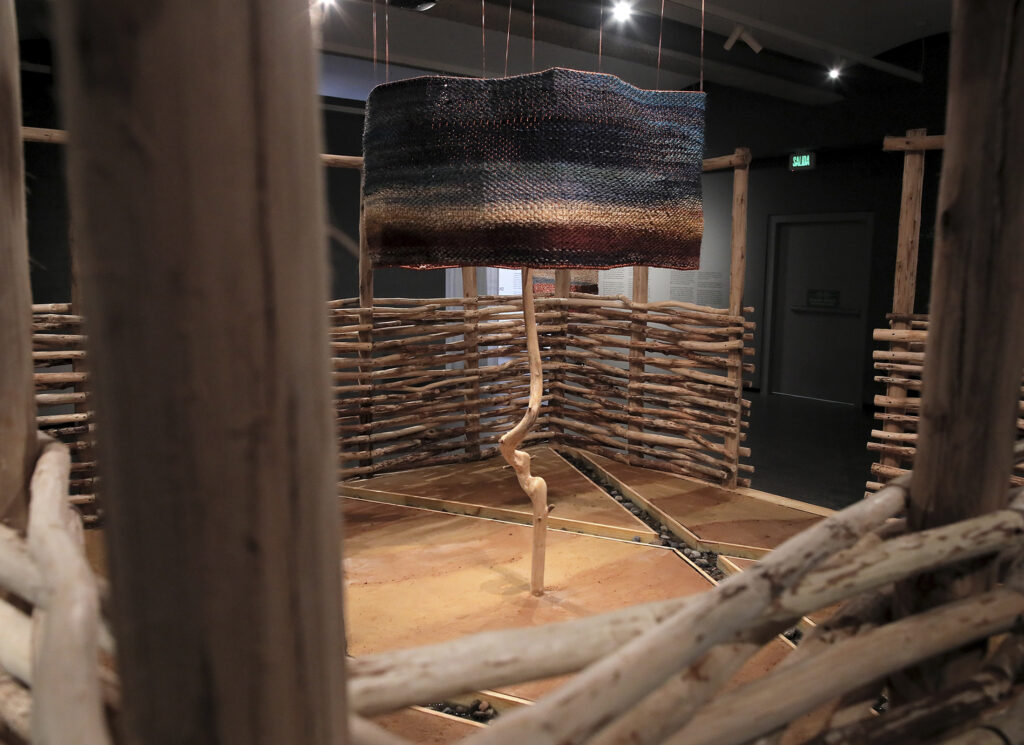
El hombre ha usado ese mismo lenguaje para construir sus refugios a lo largo del tiempo. Espirales, círculos, triángulos, cuadrados, rectángulos, figuras que generan una geometría que se vuelve el reflejo de quienes somos y la cosmogonía que habitamos en cada momento de la historia. Cada refugio puede leerse entonces como una inscripción del orden del cosmos en la materia y es por esto que su interior no es más que un reflejo del exterior y viceversa.
Esta obra fue construida a partir de recorridos por el territorio, del establecimiento de relaciones de atención con los materiales que la conforman: maderas caídas, fibras, tierra, agua. El proceso de creación estuvo guiado por la experiencia de habitar el territorio desde los cinco sentidos. Quien la recorra es invitado a detenerse, a percibir con el cuerpo y a reconocer, en la materia del territorio, las relaciones que nos sostienen.
Artista/Artist: Camila Rodríguez Triana
Curadores/Curator: Carlos Betancourt y Rafael Londoño.